Pet Temperament Baselines: Decode Dog & Cat Behavior

Understanding Your Pet’s Temperament: Why the “Baseline” Matters
Temperament is the steady foundation your pet brings to daily life: how quickly they bounce back after a surprise, how curious or cautious they are, and how they typically respond to people, animals, handling, and new environments. When you can separate temperament (the baseline) from behavior (the moment-to-moment output), training gets clearer, routines get calmer, and safety decisions get easier—for both dogs and cats.
Temperament vs. behavior: what stays steady and what changes
Temperament describes long-term tendencies like confidence, sociability, sensitivity, energy level, and recovery after stress. It’s the “default settings” you’ll see across many situations.
Behavior is what happens right now—shaped by learning history, context, environment, and health. A typically friendly dog might growl if startled while sleeping; a usually social cat may hide for a day after guests arrive.
Matching training plans and household rules to temperament helps reduce friction. A cautious pet often thrives on predictability and smaller training steps, while a bold pet may need more structure to prevent impulsive choices.
Quick reality check: sudden behavior shifts—new aggression, hiding, house-soiling, reactivity, or a sharp change in appetite or sleep—can signal pain, illness, or intense stress. A health assessment is a smart first step when the change is abrupt or escalating.
A simple observation routine to decode patterns
Instead of guessing, use a one-week log to uncover repeatable patterns. Write down the time, location, trigger (visitor, leash, food, noise), body language, and recovery time. Track three contexts:
- At home (routine): normal daily rhythms and predictable events.
- During change: new item, new person, new route, or rearranged furniture.
- During handling: grooming, paws, ears, carrier/crate, nail trims.
Look for thresholds you can measure: distance to a trigger, how long stress signals last, and what reliably helps (space, play, food, quiet). Recovery time often reflects temperament more than the intensity of the initial reaction.
Temperament snapshot log (example)
| What happened | Body language | Trigger distance/time | Recovery | What helped |
|---|---|---|---|---|
| Doorbell rings | Dog barks, pacing, ears forward | Immediate | 2 minutes | Mat cue + chew |
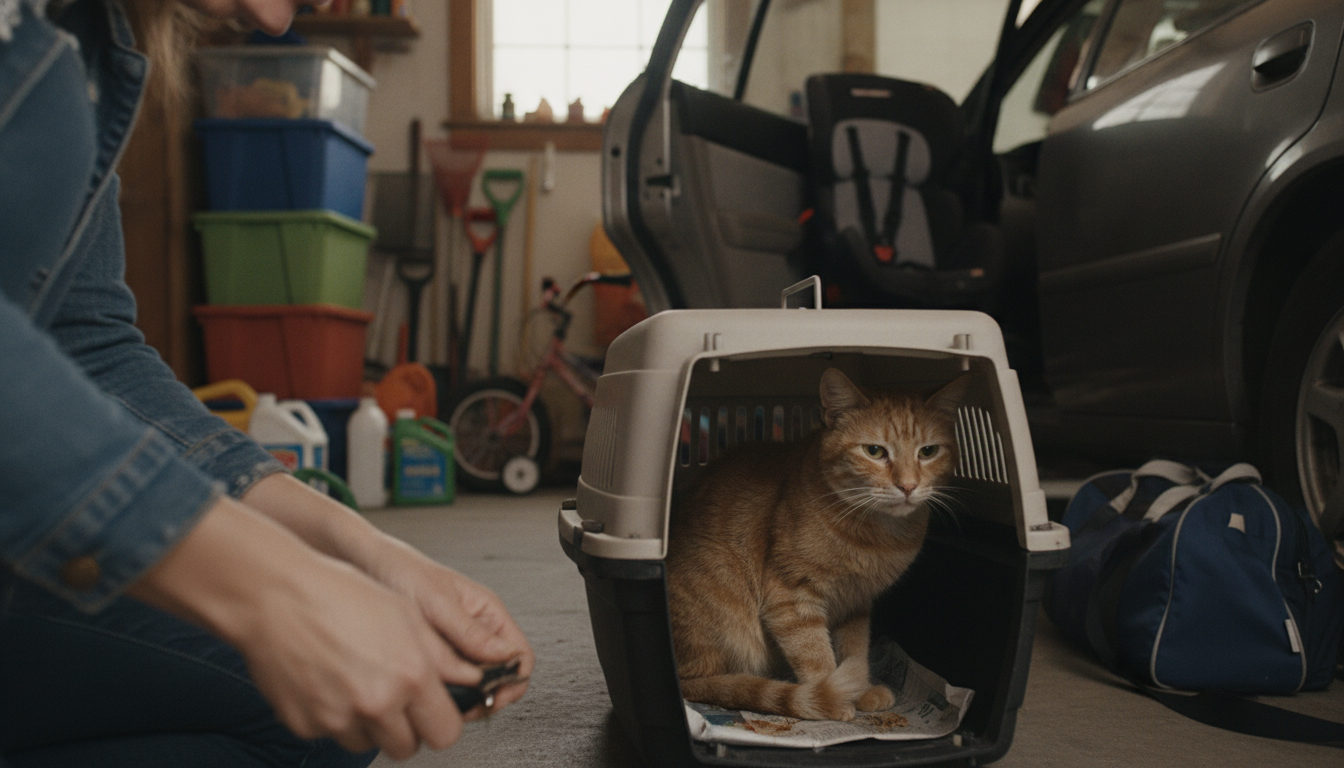
| Carrier appears | Cat freezes, ears sideways, tail tucked | Immediate | 30+ minutes | Carrier left out + treats nearby |
| Stranger approaches on walk | Dog stiffens, lip lick, turns away | 10 meters | 5 minutes | Increase distance + scatter treats |
| New vacuum sound | Cat runs, hides, dilated pupils | Immediate | 1 hour | Quiet room + gradual exposure |
Dog temperament signals that guide training choices
Dogs can look “stubborn” or “dramatic” when they’re actually communicating stress, sensitivity, or a need for distance. Key temperament dimensions to watch:
- Confidence vs. caution: Confident dogs investigate; cautious dogs hesitate, scan, or retreat. Cautious dogs often learn best with smaller steps, predictable routines, and fewer surprises.
- Sensitivity: Easily startled dogs do better with calm handling, low-pressure sessions, and carefully controlled exposure to novelty.
- Sociability: Some dogs seek contact with everyone; others are selective and prefer neutrality. Avoid forced greetings and reward calm disengagement.
- Arousal style: Some dogs escalate quickly—fast, intense reactions. Build impulse control in short bursts and include decompression breaks (sniffing, quiet chewing, or a calm walk).
Common canine stress signs include lip licking, yawning (when not tired), turning the head away, “whale eye,” sudden sniffing, shaking off, paw lifting, and a tucked tail.
Cat temperament signals that affect handling and home setup
Cats are often mislabeled as “moody,” but their behavior is frequently a direct reflection of comfort level and perceived control.
Quick decode: body language and what to do next
Common signals in dogs and cats (and safer next steps)
| Signal | What it often means | Helpful response |
|---|---|---|
| Turning head away / avoiding eye contact | Discomfort or appeasement | Pause interaction, give space, reward calm |
| Freezing or going still | High concern; may escalate | Stop, increase distance, end handling safely |
| Tail flicking (cats) / tail stiff (dogs) | Rising arousal or irritation | Reduce stimulation, offer retreat, switch to calm activity |
| Lip lick / yawning (dogs) | Stress or uncertainty | Lower difficulty, slow down, add predictability |
| Hissing/growling | Boundary signal | Do not punish; remove trigger and reassess setup |
| Barking/lunging | Distance-increasing strategy | Increase distance, reward disengagement, practice gradual exposure |
Training and care plans matched to temperament
When behavior is a health or safety concern
Get veterinary input for sudden aggression, new litter box issues, changes in appetite, sleep, mobility, or sensitivity to touch. For bite incidents, repeated attempts to bite, severe fear, or persistent inter-pet conflict, contact a qualified behavior professional. The International Association of Animal Behavior Consultants (IAABC) is one reputable place to start.
While working on change, prioritize management so unwanted behavior isn’t rehearsed: gates, leashes, separate zones, safe rooms, and clear routines. Red flags often include escalating intensity, reacting faster or at greater distances, and slower recovery after incidents. For dog safety basics, see the AVMA dog bite prevention guidance. For common cat behavior concerns, the ASPCA cat behavior resources can help you spot patterns worth addressing.
A practical guide for building a temperament-informed routine
Helpful digital guides (in stock)
- Understanding Your Pet’s Temperament: A Complete Guide to Decoding Dog and Cat Behavior for Better Care and Training
- Mindful Clarity: Journal & Prompts | Printable Journal with Daily Mindfulness Prompts
- Finally Focused: The Anti-Procrastination Workbook – Productivity Ebook & Focus-Building Guide
FAQ
What is a red flag behavior in cats?
Red flags include sudden hiding, new aggression, litter box avoidance, reduced appetite, excessive vocalizing, or sensitivity to touch. Abrupt changes can indicate pain or illness, so a vet check is warranted; until then, provide space, a quiet room, and avoid forcing contact.











Leave a comment