Cat Body Language Cheat Sheet: Tails, Ears, Meows

Cat Body Language & Behavior Cheat Sheet: Read Feline Signals, Postures, and Meows
Cats communicate constantly—just not always in ways humans expect. A quick-reference cheat sheet makes it easier to spot stress early, encourage friendly interactions, and respond appropriately to vocalizations and body postures. This guide breaks down common feline signals (tail, ears, eyes, whiskers, stance, and sound) and how to use them together for clearer day-to-day communication.
Why cat body language matters in everyday life
Reading feline body language isn’t about turning your home into a “cat lab.” It’s about preventing avoidable friction and making daily interactions feel safe for everyone.
- Reduces accidental mixed messages (petting when a cat is overstimulated, approaching when a cat wants space).
- Helps prevent bites and scratches by noticing escalation signs early (tense body, twitching tail, pinned ears).
- Supports better bonding by reinforcing “safe” signals (slow blinks, relaxed posture, upright tail greeting).
- Improves multi-cat harmony by recognizing conflict cues (hard staring, blocking, stalking posture).
- Especially helpful for new adopters, kids in the home, pet sitters, and guests who aren’t fluent in cat signals.
For quick daily reference, the Cat Body Language & Behavior Cheat Sheet | Printable Cat Communication Guide | Learn Feline Signals, Postures & Meows is designed to be posted where decisions happen (fridge, feeding station, carrier closet) so cues are easy to spot in the moment.
How to read signals the right way: context + clusters
A single cue is only a clue. The most reliable approach is to read “clusters” of signals and weigh context.
- Combine at least three signals (for example: ears + tail + posture) before deciding what your cat is “saying.”
- Factor in context: location (vet carrier vs. couch), recent events (loud noise, new pet), and your cat’s normal baseline.
- Watch for changes over time: sudden hiding, avoidance of touch, or new vocal patterns can signal stress or illness.
- Use a simple 3-step check: (1) distance your cat chooses, (2) body tension level, (3) recovery speed after a startle.
Quick read: relaxed vs. worried vs. defensive
| Body area | Relaxed/comfortable | Worried/uncertain | Defensive/over threshold |
|---|---|---|---|
| Tail | Up with soft curve; still or gently swaying | Low or tucked; tip flicking | Puffed; lashing; held tight |
| Ears | Forward/neutral; swivels normally | Sideways (“airplane”); frequent swivels | Pinned back; flat to head |
| Eyes | Soft gaze; slow blinks; normal pupils | Wide eyes; enlarged pupils possible | Hard stare or very wide; rapid scanning |
| Body | Loose; weight evenly distributed | Crouched; ready to retreat | Arched, stiff, leaning away or braced |
| Whiskers | Neutral; slightly forward when curious | Pulled back slightly | Tight back or rigid forward with tension |
| Vocal | Quiet chirps/trills; normal meows | More frequent meowing; low growl possible | Growl/hiss/spit; yowl |
Tail and posture: what the body is “saying” before the mouth does
Posture and tail movement often change before your cat escalates to swatting or hissing—making them some of the most useful “early warning” signals.
- Upright tail greeting: Often signals confidence and friendliness. Respond with a calm voice and a gentle, non-looming approach.
- Tail tip twitching: Can mean rising arousal—either play excitement or irritation. Check ears and overall body tension to tell which direction it’s going.
- Crouching with weight shifted back: Commonly indicates uncertainty. Give space, avoid reaching over the head, and keep an easy exit route open.
- Belly exposure (side-lying): Sometimes relaxation, sometimes a “no-touch zone.” Look for loose limbs, soft face, and slow blinks before attempting contact.
- Arched back + sideways stance: Defensive display. Increase distance, reduce noise/motion, and let your cat reset.
- Freezing suddenly: A pause can precede a bolt, swat, or pounce. Stop moving and reassess your cat’s ears, tail, and breathing.
Ears, eyes, whiskers: the micro-signals that change fast
If you want a broader framework for temperament and day-to-day handling (especially in multi-pet homes), Understanding Your Pet’s Temperament: A Complete Guide to Decoding Dog and Cat Behavior for Better Care and Training helps connect body language to predictable behavior patterns and practical routines.
Meows and other sounds: what cats vocalize (and why)
Common scenarios and what to do next
- Petting turns into a swat: Watch for skin ripples, tail thumps, and ears rotating sideways/back. Pause, offer a treat, and keep future sessions shorter.
- Hiding after visitors: Provide a safe room, a high perch, and familiar scents. Let your cat approach on their own schedule.
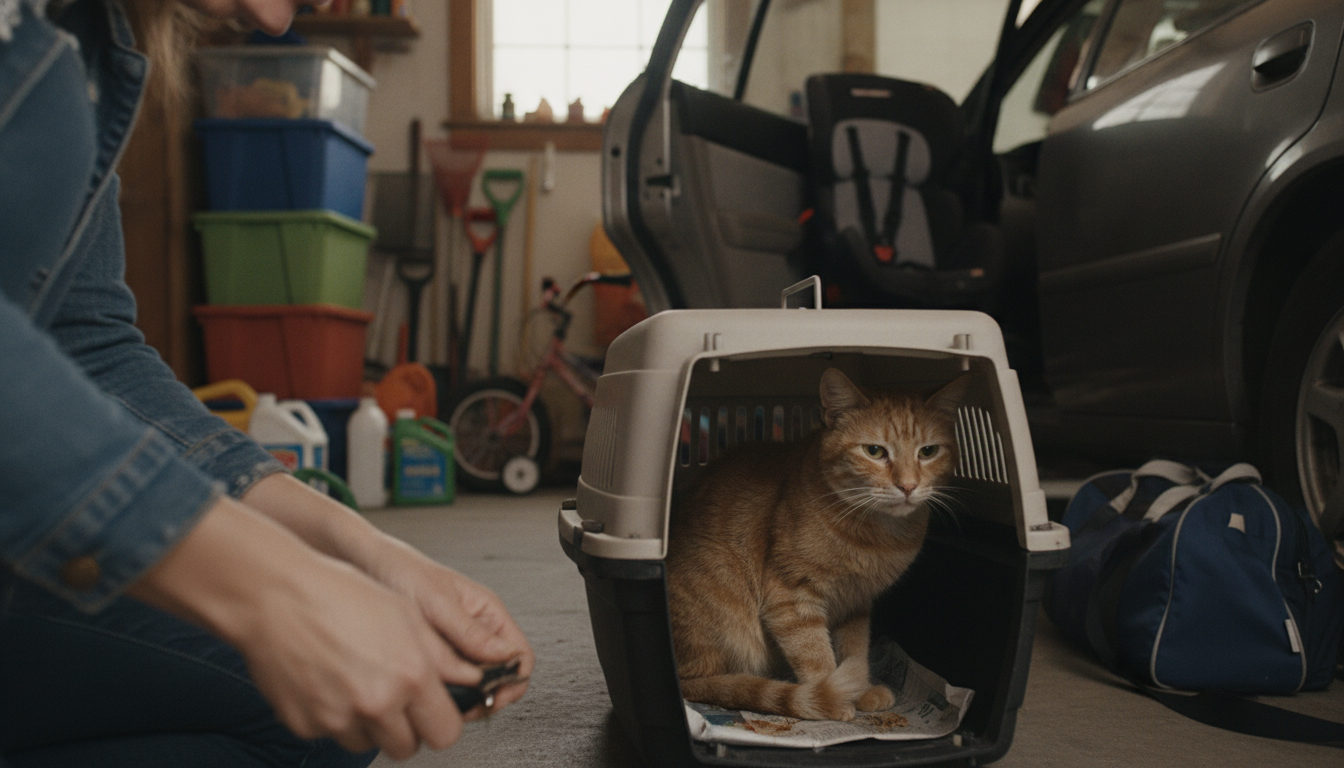
- Carrier or vet stress: Leave the carrier out as a neutral hangout with familiar bedding, and reward calm proximity. (More on low-stress handling at American Association of Feline Practitioners (AAFP) — Cat-Friendly resources.)
- Two-cat tension: Prevent hallway standoffs, add vertical space, and separate resources (food/water/litter). If needed, reintroduce gradually. (Helpful background at International Cat Care — Understanding cat behaviour.)
- Play aggression: Increase daily interactive play, use wand toys (not hands), and end sessions with a small food reward to “complete” the hunt.
- When to consider pain/illness: Sudden behavior shifts, sensitivity to touch, new aggression, decreased grooming, or litter box changes warrant a vet check.
Printable cheat sheet: how to use it at home
If you want a ready-to-print reference, the Printable Cat Body Language & Behavior Cheat Sheet is a simple way to keep everyone consistent—especially during busy moments like feeding, guests arriving, or cat introductions.
FAQ
How do I say “I love you” in cat language?
Use slow blinks, soft eyes, and a calm voice, then give your cat the option to come closer rather than reaching first. Respecting distance and keeping routines predictable (meals, play, quiet time) is one of the clearest “safe and caring” signals to a cat.
How to tell if a cat is sad body language?
Look for a cluster: less social interaction, reduced play, hiding, a lowered posture, ears slightly sideways, decreased grooming, or changes in appetite and vocalizations. If the change is sudden or persists, a veterinary check can help rule out pain or illness.











Leave a comment